To clean headlights, you can use toothpaste or baking soda as a gentle abrasive to remove fog and restore clarity. Additionally, polishing compounds like Rain-X can help remedy UV damage.
Windex or regular car soap can be used for simple cleaning, but may not provide long-lasting results. Foggy headlights are a natural symptom of aging and can be addressed with these cleaning methods. It’s important to avoid scratching or damaging the headlights while cleaning.
Introduction To Headlight Cleaning Methods
Discover different methods for cleaning headlights, including using toothpaste, abrasive cleansers like baking soda, and professional-grade products. Easily restore cloudy headlights and improve visibility on your car with these effective cleaning techniques. Upgrade your car care routine and maintain clear, bright headlights with these expert tips.
Importance Of Clear Headlights For Vehicle Safety And Aesthetics:
- Clear headlights are crucial for ensuring vehicle safety, as they enhance visibility during nighttime driving and adverse weather conditions.
- Clear headlights improve road visibility for both the driver and other motorists, reducing the risk of accidents.
- Faded or cloudy headlights can impair your ability to spot road hazards, pedestrians, and other vehicles.
- Failing to maintain clear headlights may result in reduced brightness and limited illumination, compromising your safety on the road.
- Additionally, clear headlights contribute to the overall aesthetics of your vehicle, giving it a polished and well-maintained appearance.
Common Reasons For Foggy And Hazy Headlights:
- Exposure to the elements, such as sunlight, rain, and temperature changes, can cause oxidation, leading to foggy and hazy headlights.
- Ultraviolet (UV) rays from the sun can deteriorate the protective coating on headlights, causing them to become yellowish and cloudy over time.
- Moisture buildup inside the headlights can occur due to faulty seals or cracks, resulting in foggy and hazy appearance.
- Road debris, dirt, and grime can accumulate on the headlights, further reducing their clarity and brightness.
- Chemical reactions between the plastic headlight lens and environmental pollutants can cause discoloration and haziness.
Benefits Of Regular Headlight Maintenance:
- Regular headlight maintenance ensures optimal visibility, reducing the risk of accidents and improving overall road safety.
- Clean and clear headlights enhance the aesthetics of your vehicle, making it look well-maintained and appealing.
- By maintaining clear headlights, you can contribute to the longevity and functionality of the headlight bulbs.
- Regular cleaning and restoration of headlights can help extend their lifespan, saving you money on costly replacements.
- Taking care of your headlights can enhance the resale value of your vehicle, as potential buyers appreciate well-maintained and functional headlights.
Remember, keeping your headlights clear and well-maintained is not only important for your safety on the road but also for the overall appearance and value of your vehicle. Regular cleaning and restoration will ensure optimal visibility and contribute to a polished and well-maintained look.
Credit: omniautoglass.com
Diy Headlight Cleaning Methods
Discover effective DIY headlight cleaning methods to restore your headlights’ clarity and brightness. From using toothpaste to baking soda, these techniques are easy and affordable for maintaining clear and safe headlights for your car.
In this section, we will explore various DIY headlight cleaning methods that you can easily try at home. These techniques are cost-effective and can help restore your headlights to their former glory without the need for professional assistance. Let’s dive in:
Using Toothpaste To Restore Headlights
Toothpaste is an effective and affordable solution for cleaning headlights. Here’s how to do it:
- Selecting the right toothpaste for the task:
- It is recommended to choose a toothpaste with mild abrasives, such as baking soda or silica, for better results.
- Avoid toothpaste with gel or whitening properties, as they may not be as effective.
- Step-by-step process of applying toothpaste to headlights:
- Start by cleaning the headlights with soap and water to remove any surface dirt.
- Apply a small amount of toothpaste to a clean, damp cloth or sponge.
- Gently rub the toothpaste onto the headlights using circular motions.
- Continue rubbing for a few minutes, focusing on any particularly cloudy areas.
- Rinse the headlights with water and wipe them dry with a clean cloth.
- Buffing headlights with a Dremel for optimal results:
- If the toothpaste alone doesn’t give you the desired results, you can use a Dremel tool with a buffing attachment for better abrasion.
- Use the Dremel at a low speed and apply light pressure while buffing the headlights in circular motions.
- Be cautious to avoid overheating the plastic or damaging the paint around the headlights.
- Removing wax residue and revealing clear headlights:
- After cleaning the headlights, you may notice a hazy residue from wax or other sealants.
- To remove this residue, apply a small amount of rubbing alcohol to a clean cloth and gently wipe the headlights until the haze is gone.
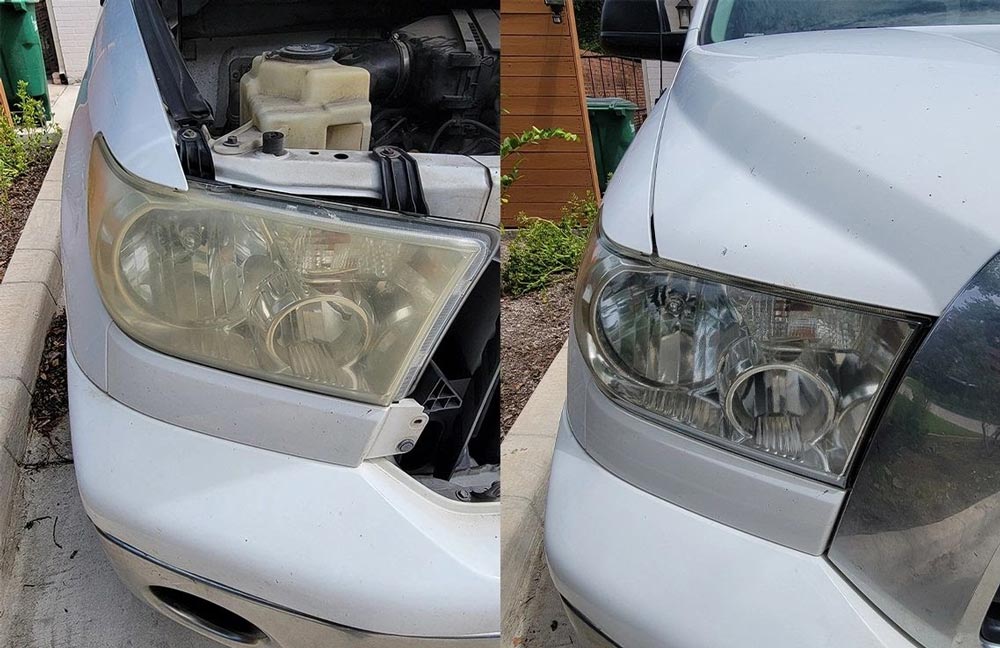
- Before and after comparison for visual impact:
- To truly understand the effectiveness of DIY headlight cleaning methods, take before and after photos of your headlights.
- These visual comparisons can be satisfying and motivation for others to try these methods too.
Permanent Headlight Restoration Techniques
If you’re looking for long-lasting restoration methods, here are some more advanced techniques worth considering:
- Materials and tools needed for long-lasting restoration:
- Sandpaper (varying grits)
- Clear coat spray
- UV sealant
- Microfiber cloth
- Masking tape
- Spray bottle with clean water
- Protective measures: Taping around the headlights:
- To protect the surrounding body panels from accidental scratches, it is advisable to use masking tape to tape around the headlights.
- Cutting out the headlight for improved access and coating:
- For a more thorough restoration, consider cutting out the headlight from the car.
- This allows for better access to all sides of the headlight and ensures even coating of the restoration products.
- Applying multiple coats for durability and clarity:
- To achieve long-lasting results, apply multiple coats of clear coat spray.
- Make sure each coat is dry before applying the next one.
- This will provide durability and clarity to the headlights.
- Wet sanding technique for refined results:
- If the headlights have severe oxidation or scratches, wet sanding is a technique that can help achieve smoother results.
- Wet sand the headlights using gradually finer grit sandpaper, followed by polishing to restore clarity.
Conclusion And Final Tips For Maintaining Restored Headlights
DIY headlight cleaning methods can be a cost-effective way to restore the clarity of your headlights. Remember to choose the right toothpaste, follow the step-by-step process, and consider more permanent restoration techniques for long-lasting results. By applying these methods and taking the necessary precautions, you can enjoy clear and well-maintained headlights on your car.
Other Cleaning Methods And Tips
Improve your visibility on the road with these headlight cleaning methods. Learn how to restore your cloudy headlights using toothpaste, baking soda, or professional-grade cleaners to ensure clear and bright headlights for safer driving.
Chemical Headlight Cleaners Available On The Market:
- Turtle Wax Headlight Lens Restorer: This cleaner is designed to remove yellowing and oxidation from headlights, improving visibility on the road.
- Meguiar’s Headlight Coating: This product not only cleans the headlights but also provides a protective coating to prevent future damage and ensure long-lasting clarity.
Reviewing Popular Options From Brands Like Turtle Wax And Meguiar’S:
When it comes to headlight cleaning, Turtle Wax and Meguiar’s are well-known brands that offer effective solutions. Let’s take a closer look at their offerings:
- Turtle Wax Headlight Lens Restorer: This cleaner is highly rated for its ability to remove discoloration and scratches, restoring headlights to their original clarity.
- Meguiar’s Headlight Coating: This product provides a two-in-one solution by cleaning headlights and providing a protective coating. It is known for its long-lasting results and resistance to UV damage.
Discussing The Effectiveness Of Different Formulations:
Each brand offers different formulations, such as sprays and creams, that are designed to tackle various headlight issues. Some formulations may be more effective than others for specific situations.
Pros And Cons Of Using Chemical Headlight Cleaners:
Consider the following pros and cons before using chemical headlight cleaners:
Pros:
- Can restore headlights to their original clarity
- Provides a protective coating for long-lasting results
- Easy to use and readily available in stores
Cons:
- May require frequent application for long-term maintenance
- Some cleaners may be abrasive and could damage the headlight surface if not used correctly
Alternative Cleaning Methods Without Using Sanding:
If you prefer not to use sanding, there are alternative methods for cleaning headlights:
- Toothpaste: Using toothpaste with baking soda or whitening properties can help remove minor discoloration and restore clarity.
- Vinegar and water solution: This natural cleaning solution can remove dirt and grime from headlights without damaging the surface.
- Rubbing alcohol: Diluted rubbing alcohol can effectively remove oxidation and yellowing on headlights.
Exploring Alternative Methods For Clearing Foggy Headlights:
Foggy headlights can be a safety hazard, reducing visibility on the road. Here are some alternative methods to clear foggy headlights:
- Baking soda-based cleaning solution: Mixing baking soda with water or vinegar to form a paste and applying it to the headlights can help remove foggy residue.
- Hydrogen peroxide solution: A mixture of hydrogen peroxide and water can be applied to foggy headlights to remove oxidation and restore clarity.
Evaluating The Effectiveness Of Baking Soda-Based Cleaning Solutions:
Baking soda-based cleaning solutions can be effective in removing oxidation and restoring clarity to headlights. However, the effectiveness may vary depending on the severity of the damage.
Comparing Different Diy Approaches For Headlight Cleaning:
There are several DIY approaches to cleaning headlights. Here’s a comparison of popular methods:
- Toothpaste method: This method is affordable and easy to do at home, but it may not be as effective for severe oxidation.
- Vinegar and water solution: This natural cleaning method is gentle on headlights, but it may require repeated applications for optimal results.
- Baking soda-based paste: This method is effective for removing oxidation and can be combined with other ingredients like vinegar or hydrogen peroxide for added effectiveness.
Faqs About Headlight Cleaning Methods:
What Is The Best Way To Clean Headlights?
The best way to clean headlights depends on the severity of the damage. For minor issues, toothpaste or vinegar solutions can be effective. For more severe oxidation, chemical headlight cleaners may be required.
What Do Professionals Use To Clean Headlights?
Professionals often use specialized headlight restoration kits that include cleaning solutions, sanding pads, and polishing compounds to achieve optimal results.
How Often Should Headlights Be Cleaned?
Headlights should be cleaned regularly to maintain optimal visibility. It is recommended to clean headlights at least once every few months or whenever visibility is reduced.
Can Cloudy Headlights Be A Safety Hazard?
Cloudy headlights can reduce visibility on the road, especially at night or in poor weather conditions. This could pose a safety hazard to the driver and others on the road.
Are There Any Diy Alternatives To Professional Headlight Restoration Services?
Yes, there are DIY alternatives to professional headlight restoration services. Methods like toothpaste and baking soda-based pastes can provide satisfactory results for minor to moderate oxidation. However, for severe damage, it is recommended to seek professional restoration services for the best outcome.
Frequently Asked Questions For Headlight Cleaning Methods
What Is The Best Way To Clean Headlights?
To clean headlights, sand off the foggy parts, apply brake fluid in circular motions, polish with a compound, and buff for a clear finish.
What Do Professionals Use To Clean Headlights?
Professionals use sanding, brake fluid, polishing compound, and a cloth to clean headlights effectively. Toothpaste and baking soda can also be used.
How Do You Restore Cloudy Headlights?
To restore cloudy headlights, you can try using toothpaste or baking soda as effective cleansers. These products are abrasive enough to remove fog without damaging the headlights. Polishing compounds like Rain-X may also help with UV damage. Avoid using Windex or regular car soap as they are not as effective.
Should I Use Windex On My Headlights?
No, it is not recommended to use Windex on your headlights.
Conclusion
Cleaning your headlights is an essential task to ensure optimal visibility while driving. There are various methods you can use to restore and maintain your headlights. Toothpaste and baking soda are effective cleansers, as they are abrasive enough to remove fog without damaging the headlights.
Polishing compounds such as Rain-X can also help remedy UV damage. Additionally, professionals often sand off the foggy parts of the headlight lens and apply brake fluid in a circular motion to remove dirt and achieve a clear lens. Finally, regular washing with car soap or Windex can help maintain the cleanliness of your headlights.
With these methods, you can keep your headlights in top condition and improve your driving experience. Remember to choose the method that works best for you and always prioritize safety on the road.