Choosing the right beam headlights for your car is crucial for safety, visibility, and overall driving comfort. With the variety of headlight technologies available today, it can be challenging to know which type is best suited for your needs. This article will guide you through the different types of beam headlights, the technologies behind them, and how to choose the best option for your car based on your driving habits, budget, and preferences.

Credit: Amazon.com
Understanding the Types of Beam Headlights
Before diving into specific technologies, it’s essential to understand the basic types of beam headlights available.
Low Beam Headlights
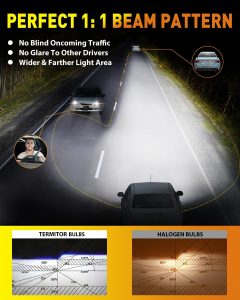
Low beams are the most commonly used headlights for everyday driving. They are designed to cast a wide, downward light that illuminates the road without causing glare for oncoming traffic.
- Pros: Ideal for city driving and well-lit areas; less likely to cause glare.
- Cons: Limited visibility range compared to high beams.
High Beam Headlights
High beams, or full beams, provide a more focused and intense light that extends further down the road. They are typically used in rural areas or on highways where there is little to no ambient lighting.
- Pros: Excellent visibility on dark, unlit roads; useful for spotting hazards from a distance.
- Cons: Can blind oncoming drivers if not used carefully; not suitable for use in traffic.
Fog Lights

Credit: Amazon.com
Fog lights are designed to cut through fog, rain, or snow by projecting a low, wide beam of light. They are usually mounted lower on the vehicle to reduce glare from water particles in the air.
- Pros: Effective in poor weather conditions; reduces glare.
- Cons: Limited use; not suitable for regular driving conditions.
Adaptive Beam Headlights
Adaptive beam headlights are an advanced technology that automatically adjusts the direction and intensity of the light based on driving conditions. These lights are particularly useful for night driving on winding roads.
- Pros: Enhanced visibility around corners and over hills; reduces the risk of blinding other drivers.
- Cons: More expensive; may require a vehicle equipped with the necessary sensors.
Matrix Beam Headlights
Matrix beam headlights are even more advanced, using a grid of individual LEDs that can be controlled independently to provide precise lighting. This allows for selective dimming or brightening in specific areas, improving visibility without causing glare.
- Pros: Superior control over light distribution; excellent for complex driving environments.
- Cons: High cost; typically available only on high-end vehicles.
Halogen vs. HID vs. LED Headlights

Credit: Amazon.com
Choosing the right headlight technology is just as important as selecting the beam type. Here’s a breakdown of the most common options.
Halogen Headlights
Halogen headlights have been the standard for decades. They are inexpensive and easy to replace, making them a popular choice.
- Pros: Affordable; widely available; simple to replace.
- Cons: Shorter lifespan; less energy-efficient; not as bright as newer technologies.
HID (High-Intensity Discharge) Headlights
HID headlights produce a much brighter and more focused light than halogen bulbs. They are known for their distinct bluish tint and are often used in luxury vehicles.
- Pros: Brighter than halogen; longer lifespan; better visibility at night.
- Cons: More expensive; may require a conversion kit for some vehicles.
LED (Light Emitting Diode) Headlights
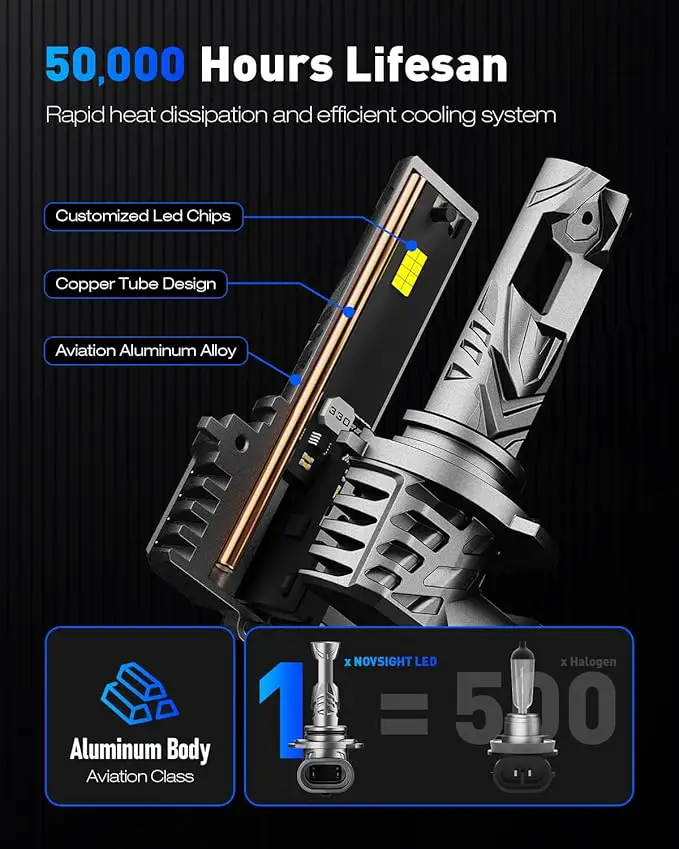
LED headlights are becoming increasingly popular due to their energy efficiency, long lifespan, and superior brightness. They are common in modern vehicles and offer excellent performance in all driving conditions.
- Pros: Energy-efficient; very bright; long lifespan; available in a variety of colors.
- Cons: Higher upfront cost; may require special fittings for older cars.
Which Technology is Best for Your Car?
- Budget: Halogen is the most cost-effective, while LED and HID offer better performance at a higher price.
- Compatibility: Ensure your vehicle is compatible with the type of headlight you choose, especially if considering an upgrade from halogen to HID or LED.
- Driving Needs: LED and HID are better for those who drive frequently at night or in poor weather conditions.
Choosing the Right Beam Pattern
The beam pattern is another critical factor when selecting headlights.
Low Beam Pattern
Best for city driving and areas where you share the road with other vehicles. The pattern is designed to illuminate the road directly in front of you without causing glare.
High Beam Pattern
Suitable for rural and highway driving, where you need to see far ahead. The pattern focuses the light straight ahead, offering maximum visibility but requiring cautious use to avoid blinding others.
Combination Beam Headlights
Some headlights offer a combination beam that switches between low and high beams automatically or on-demand. This is a good choice if you frequently switch between different driving environments.
Matching Beam Headlights to Driving Conditions
Your driving conditions play a significant role in determining the best headlight for your car.
City Driving
For city driving, low beam headlights are usually sufficient. They provide enough light to navigate urban streets without causing excessive glare. LED headlights are a great choice here due to their energy efficiency and brightness.
Highway and Rural Driving
If you often drive on highways or rural roads, high beam headlights are crucial. HID or LED lights are preferable as they offer better visibility over long distances.
Off-Road and Extreme Conditions
For off-road driving or extreme conditions like fog or heavy snow, fog lights and adaptive headlights are the best options. They help maintain visibility in challenging environments.
Legal Considerations for Beam Headlights

Credit: Amazon.com
Headlight Regulations
Different regions have specific regulations regarding headlight brightness and usage. Make sure your headlights comply with local laws to avoid fines or safety issues.
Aftermarket Headlights and Compliance
If you’re considering aftermarket headlights, ensure they are legal in your area and properly installed. Some aftermarket options, especially those with high intensity, may not be road-legal.