
HID headlights work by creating light through an electrical discharge between two electrodes and a plasma or ionized gas. These headlights use high-intensity discharge light bulbs and lamps to produce a bright, white light.
Unlike traditional halogen headlights, HID headlights do not have a filament but instead utilize an arc for illumination. HID headlights are known for their crisp and powerful light output, making them a popular choice among car enthusiasts. They offer improved visibility and can provide a longer range of illumination compared to other headlight options.
Additionally, HID headlights are energy-efficient and have a longer lifespan, making them an attractive choice for many drivers.
Understanding Hid Headlights
Understanding HID headlights involves knowing how they work. HID, or high-intensity discharge, headlights create light by sending an electrical discharge between two electrodes through a plasma or ionized gas, instead of using a filament like traditional headlights. This technology provides brighter and more efficient lighting for vehicles.
What Are Hid Headlights?
HID headlights, also known as high-intensity discharge headlights, are a type of lighting technology that provide brighter, more efficient illumination compared to traditional halogen headlights. Instead of using a heated filament like halogen bulbs, HID headlights create light by passing an electrical charge through a gas-filled chamber. This process produces a strong, intense light that is closer to natural daylight, allowing for better visibility while driving at night or in adverse weather conditions.The Difference Between Hid And Halogen Headlights
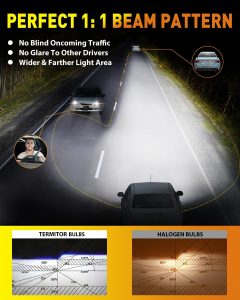
The main difference between HID and halogen headlights lies in their technology and performance. While both types of headlights produce light, they do so in different ways. HID headlights use a high-voltage electrical charge to ionize xenon gas inside a glass chamber. As the gas ignites, it creates an arc of bright light. This arc produces a greater amount of lumens, resulting in a brighter and more focused beam. In addition, HID headlights have a longer lifespan and consume less energy compared to halogen bulbs. On the other hand, halogen headlights rely on a tungsten filament that heats up when electricity passes through it. This filament emits light, but it is not as intense as the light produced by HID headlights. Halogen bulbs also have a shorter lifespan and consume more energy, making them less efficient overall. In terms of performance, HID headlights offer improved visibility and a longer beam range compared to halogen headlights. The intense, white light emitted by HID headlights illuminates the road more effectively, reducing eye strain for the driver and enhancing road safety. It is also worth mentioning that HID headlights are available in different color temperatures, ranging from pure white to blue. These color variations can add a stylish and modern touch to a vehicle’s appearance, while still providing the same high level of illumination. In conclusion, HID headlights offer numerous advantages over traditional halogen headlights, such as brighter illumination, longer lifespan, and higher energy efficiency. Understanding HID headlights and their differences with halogen bulbs can help you make an informed decision when it comes to choosing the best lighting option for your vehicle.The Science Behind Hid Headlights
HID headlights, or high-intensity discharge lights, work by creating light through an electrical discharge between two electrodes and through ionized gas. Unlike traditional headlights, HID headlights do not have a filament and produce a brighter, more intense light.
The Basics Of Gas-discharge Arc Lamps
HID headlights, also known as high-intensity discharge light bulbs and lamps, belong to a family of gas-discharge arc lamps. Instead of relying on a heated filament like traditional halogen bulbs, HID headlights create light by utilizing an electrical discharge between two electrodes and a plasma, or ionized gas.
How Hid Headlights Create Light Using Ionized Gas
HID headlights work by passing an electrical current through a xenon gas-filled tube. This process, known as ionization, occurs when the high voltage provided by the ballast ignites the xenon gas, creating a plasma state. As the plasma interacts with the tungsten electrodes at either end of the tube, it produces an intense white light.
The combination of xenon gas and the high voltage arc result in a significantly brighter light output compared to traditional halogen bulbs. HID headlights provide enhanced visibility on the road, improving safety during nighttime driving or in low-light conditions.
The electrode design of HID headlights also contributes to their efficiency and durability. Unlike halogen bulbs with fragile filaments, HID headlights have rugged electrodes that can withstand the high temperatures and stresses of the ionization process. This attribute makes HID headlights more resistant to vibrations and extends their lifespan.
Additionally, HID headlights offer better color temperature options, ranging from cool white to blue-white hues. The color temperature not only affects the aesthetics of the light but can also impact visibility and driver perception. The higher the color temperature, the more visually penetrating the light appears, enhancing contrast and visibility of road markings and signs.
Problems And Solutions For Hid Issues
- Your HID kit was poorly made.
- Your ballast is bad.
- Your bulb is bad.
- Your HID was improperly installed.
- Your HID system is not receiving a stable power supply, causing flickering or inconsistent light output.
Components Of Hid Headlights
HID headlights, or high-intensity discharge headlights, work by sending an electrical discharge through a plasma to create light. Unlike traditional headlights, HID headlights do not have a filament but instead use an arc between two electrodes to produce light. This technology provides brighter and more efficient lighting for vehicles.
Exploring The Role Of Electrodes In Hid Headlights
In HID headlights, one of the key components responsible for producing light is the electrodes. These small metal rods play a crucial role in creating the electrical discharge required for the operation of HID lamps. The electrodes are positioned inside the bulb and are made from materials that can withstand high temperatures and intense electrical currents. When an electrical charge is applied to the electrodes, it creates an arc of electricity that passes through the ionized gas or plasma inside the bulb. This process triggers the production of intense light. The positive electrode, also known as the anode, is typically made of tungsten, while the negative electrode, known as the cathode, is often made of metal alloys or rare earth elements. The anode and cathode work together to form the electrical arc that illuminates the HID headlight.Understanding The Function Of Ballasts In Hid Headlights
Another essential component of HID headlights is the ballast. The ballast serves as a power regulator that helps create the initial electrical charge required for the lamp to ignite and maintain a stable operation. The ballast acts as a control unit for the entire HID system. It ensures that the lamp receives the appropriate voltage and current during the startup phase, as well as during continuous operation. By regulating the electrical output, the ballast prevents overheating and ensures the longevity of the HID headlight system. Typically, HID ballasts are designed to convert the standard electrical input from the vehicle’s battery to the higher voltage needed to operate the HID lamp efficiently. They also provide a consistent current flow to stabilize the electrical arc once it is initiated by the electrodes. This steady power supply ensures a consistent and bright light output from the HID headlights.The Significance Of Ignitors In Hid Headlights
Ignitors are yet another vital component of HID headlights. They are responsible for generating the high voltage needed to initiate the electrical arc between the electrodes inside the bulb. When the vehicle’s headlight switch is turned on, the ignitor sends a high-voltage pulse to the ballast, which, in turn, increases the voltage sent to the electrodes. This high voltage pulse creates a spark across the electrodes, ionizing the gas within the bulb and initiating the illumination process. The ignitor plays a crucial role in HID headlight systems as it ensures a quick and reliable ignition. Without the ignitor, the HID lamp may fail to start or experience delayed ignition, resulting in poor lighting performance. In conclusion, HID headlights are composed of various components that work together to provide bright and efficient lighting. The electrodes create the electrical arc, the ballast regulates power flow, and the ignitor generates the initial high voltage. Understanding these components is essential for maintaining and upgrading HID headlight systems for optimal performance on the road.
Credit: www.dutchdirect.us
The Operation Of Hid Headlights
HID headlights, or high-intensity discharge headlights, work by creating light through an electrical discharge between two electrodes and a plasma. They differ from traditional halogen headlights as they do not have a filament and produce a brighter, more efficient light.
### The Operation of HID Headlights HID headlights, also known as high-intensity discharge headlights, operate in a unique and efficient manner. Understanding how HID headlights work can help you appreciate their advantages over other lighting options. In this section, we will explore the operation of HID headlights, focusing on two key aspects: How HID Headlights Start and Sustain the Arc, and The Beam Formation Process in HID Headlights. #### How HID Headlights Start and Sustain the Arc At the heart of HID headlights is the arc that forms between two electrodes inside the bulb. This arc is responsible for generating the intense light that makes HID headlights so popular. But how does this arc begin and continue to emit light? To start the arc, a high-voltage ignitor is used. The ignitor generates a substantial electrical charge that initiates the discharge between the two electrodes. Once the arc is established, a ballast takes over to provide the necessary voltage and regulate the current. The ballast ensures a stable and consistent flow of electricity to sustain the arc throughout the operation of the HID headlights. With this efficient startup mechanism, HID headlights can quickly reach their full brightness, eliminating the warm-up time required by other lighting options. This instant illumination provides enhanced visibility on the road, especially in low-light conditions where rapid response is crucial. #### The Beam Formation Process in HID Headlights After the arc is established, the next significant step in the operation of HID headlights is the formation of the beam. Unlike traditional headlights that rely on a filament, HID headlights utilize a combination of xenon gas and vaporized salt to create a light-emitting plasma. As the electrical discharge passes through the xenon gas, it causes the gas molecules to ionize. This ionization process excites the atoms, causing them to emit photons, which are particles of light. The vaporized salt within the HID bulb helps to regulate the arc’s temperature and color, ensuring a consistent and stable beam output. The emitted photons then pass through a series of reflectors and lenses within the HID headlight housing, which shape and focus the light into a precise beam pattern. This beam formation process results in a highly concentrated and uniform illumination, improving visibility and reducing glare for both the driver and oncoming traffic. By understanding the operation of HID headlights, you can better appreciate their performance and advantages. The efficient startup mechanism and the precise beam formation process contribute to the superior visibility provided by HID headlights. In the next section, we will delve deeper into the benefits of HID headlights and why they are favored by many drivers.Advantages And Disadvantages Of Hid Headlights
When it comes to automotive lighting, High-Intensity Discharge (HID) headlights have gained popularity for their improved visibility and efficiency. However, like any technology, HID headlights also have their own set of advantages and disadvantages. In this section, we’ll explore the benefits of using HID headlights and the drawbacks you should consider before making a decision.
Benefits Of Using Hid Headlights: Improved Visibility And Efficiency
HID headlights offer several benefits that make them a popular choice among car owners:
- Superior visibility: HID headlights produce a brighter and more intense light compared to traditional halogen bulbs. This increased brightness improves visibility, especially during nighttime driving or in adverse weather conditions.
- Efficiency: HID headlights convert more of the electrical energy into light, making them more efficient than halogen bulbs. This means they consume less power and last longer, reducing the need for frequent replacements.
- Longer lifespan: HID headlights generally have a longer lifespan compared to halogen bulbs, which can save you money in the long run by reducing the frequency of replacements.
- Enhanced aesthetics: HID headlights emit a crisp, white light that adds a stylish and modern look to your vehicle.
Drawbacks Of Hid Headlights: Cost And Glare Issues
While HID headlights offer several advantages, it’s important to consider the following drawbacks:
- Higher cost: HID headlights are typically more expensive to purchase and install compared to halogen bulbs. However, their longer lifespan and improved efficiency can offset the initial investment.
- Glare issues: HID headlights can produce a high level of glare, which may be distracting and potentially dangerous to other drivers on the road. This is particularly true if the headlights are not properly aligned or equipped with glare-reducing measures.
It’s important to weigh these advantages and disadvantages when deciding whether to switch to HID headlights. Understanding the benefits and limitations of this technology can help you make an informed decision that suits your needs and preferences.
Frequently Asked Questions For How Do Hid Headlights Work
What Are The Disadvantages Of Hid Headlights?
HID headlights have a few disadvantages, such as producing a glare that can blind oncoming drivers and being more expensive to replace. Additionally, HID headlights require ballasts and ignitors, which can sometimes fail or cause issues. It is important to properly install HID headlights and ensure they meet legal specifications if replacing halogen bulbs.
Which Is Better Hid Or Led Lights?
LED lights are better than HID lights. LEDs are brighter, more energy-efficient, and provide instant light when turned on. They do not produce the same glare as HIDs and are compact in size. Additionally, LEDs have a longer lifespan compared to HIDs.
What Is The Problem With Hid Headlights?
The problem with HID headlights can include issues with poor quality kits, faulty ballasts or bulbs, incorrect installation, failing wiring or battery, blown fuses, and improper fitment. It is important to note that HID bulbs should only be fitted in vehicles that originally had HID bulbs to comply with road legal requirements.
Is It Illegal To Have Hid Headlights?
No, it is not illegal to have HID headlights as long as they meet the specifications outlined in the legislation. However, it is important to note that HID bulbs should only be installed in vehicles that originally had HID bulbs, not in vehicles with halogen bulbs.
Conclusion
HID headlights, or high-intensity discharge light bulbs, are a type of gas-discharge arc lamp that uses an electrical discharge to generate light. Unlike traditional filament-based bulbs, HID headlights work by creating an arc between two electrodes through a plasma or ionized gas.
These headlights are known for their brightness and energy efficiency, making them a popular choice for many drivers. Whether you’re looking to upgrade your headlights or simply curious about how they work, understanding HID headlights can enhance your driving experience and improve visibility on the road.