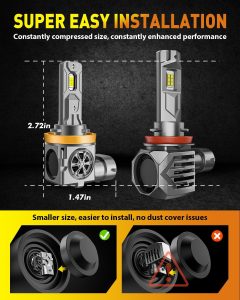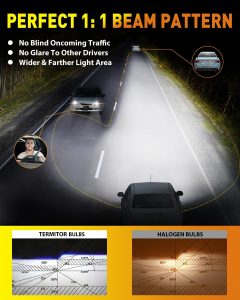
Laser headlight bulbs deliver intense, focused light for superior nighttime visibility. They offer extended range compared to traditional halogen and LED options.
Laser headlight bulbs are at the frontier of automotive lighting technology, offering unprecedented illumination for drivers. These advanced bulbs harness the power of lasers to produce a light beam that is both incredibly bright and exceptionally concentrated. This precise lighting solution not only enhances the driver’s visibility but also contributes to the safety and aesthetics of modern vehicles.
With a longer lifespan and more efficient energy consumption than conventional bulbs, laser headlights represent a significant leap forward. They are designed for those who demand top-tier performance from their vehicle’s lighting system, ensuring that every journey is lit with the utmost clarity. As regulations and compatibility continue to evolve, laser headlights stand poised to illuminate the road ahead with their cutting-edge brilliance.
Evolution Of Laser Headlight Technology
The advent of laser headlight technology marks a revolutionary leap forward in automotive lighting systems. Offering unprecedented luminosity and efficiency, laser headlights stand at the forefront of vehicle illumination advancement. From their inception, these sophisticated lights have reshaped expectations for performance, safety, and energy consumption, becoming a beacon of modern innovation on the road.
Brief History Of Car Lighting Systems
Car lighting has come a long way before reaching the high-tech brilliance of today. The odyssey began with simple oil lamps and evolved through a series of technological breakthroughs.
- Early 1900s: Acetylene lamps were first introduced, offering a more reliable source of light.
- 1910s: Electric headlights began to make their appearance, heralding a new age of automotive lighting.
- Halogen Bulbs: Dominating the market for decades since their launch in the 1960s, owing to their brighter and more durable light compared to predecessors.
- HID (High-Intensity Discharge) Lamps: Launched in the 1990s, these offered even greater light output and efficiency.
- LED (Light Emitting Diode) Technology: Represented the next significant step in the 2000s with its energy-saving prowess and longer life span.
How Laser Headlights Emerged
Laser headlight technology represents the pinnacle of this evolutionary journey. While LED technology marked a substantial improvement in efficiency and longevity, laser technology takes these attributes to another level.
- Conceptualization: Laser lighting was first conceptualized as an ambitious project to supersede LED performance, focusing on energy consumption and luminance.
- Development: Intense research and development followed, major car manufacturers pioneered prototypes and tested feasibility.
- Breakthrough: Advancements in photonics and light amplification led to the breakthrough required to make laser headlights a reality.
- Introduction: By the 2010s, laser headlights were introduced in select high-end vehicles, showcasing their superior range and efficiency.
- Evolution: Since their debut, laser headlights have evolved with enhanced safety features, such as glare-free high beams and adaptive lighting.
Laser headlights continue to evolve as they begin to trickle down from luxury models to more accessible vehicles, marking a new era of automotive illumination that prioritizes performance, energy efficiency, and safety.
Traditional Vs Laser Headlights
As the automotive world advances, the technology we use to illuminate the road ahead is also experiencing a significant shift. Tailored to enhance visibility, safety, and performance, laser headlight bulbs are emerging as a cutting-edge alternative to traditional lighting solutions. This section delves into the core differences between traditional headlights and their laser counterparts, exploring the nuances of brightness, efficiency, longevity, and performance.
Differences In Brightness And Efficiency
When it comes to illuminating the road, the brilliance and efficiency of the headlight bulb matter immensely. Traditional headlights, which mainly include halogen and high-intensity discharge (HID) bulbs, have served drivers well for decades. However, laser headlights are setting new benchmarks in terms of brightness and energy efficiency.
- Laser Headlights: Generate a more intense light that’s up to 1000 times brighter than LEDs while consuming less power.
- Traditional Headlights: Offer a reliable glow but lack the intensity and efficiency of lasers, often resulting in higher energy consumption.
Laser headlights pair luminous diodes with mirrors to focus the beam, minimizing diffusion and directing a sharp, long-range light onto the road. This technology not only enhances the driver’s visibility but also does so more efficiently – a key advantage in the era of electric and hybrid vehicles, where energy conservation is crucial.
Comparing Longevity And Performance
| Headlight Type | Longevity | Performance |
|---|---|---|
| Traditional Headlights | Decent lifespan, with halogens lasting about 1,000 hours and HIDs around 2,000 hours. | Good performance with a broader beam, but may fall short in adverse weather and long-range clarity. |
| Laser Headlights | Superior lifespan, capable of lasting up to 30,000 hours due to lower energy requirements. | Exceptional performance with a focused beam that enhances visibility in various driving conditions. |
One of the hallmarks of laser headlights is their durability. With a potential lifespan that far exceeds that of traditional bulbs, laser headlights are not only cost-effective in the long run but also more reliable in terms of maintaining consistent performance over time. In compact design and resistance to vibrations, they outshine traditional options, offering unyielding light quality and reduced maintenance concerns for drivers.
Making A Case For Laser Headlight Bulb Advancements
Laser headlight technology is a groundbreaking advancement in automotive lighting that has been steadily gaining traction. Compared to traditional halogen or even LED lights, laser bulbs offer a leap forward in terms of performance, efficiency, and safety. As innovation continues, the prevalence of laser headlight bulbs in modern vehicles is set to increase, signaling a bright future for automotive lighting. Here’s why embracing this technology is not just a trend, but a smart choice for drivers and manufacturers alike.
Benefits Of Laser Headlights In Modern Vehicles
- Exceptional brightness and range: Laser headlights emit light that is about ten times more intense than that of LEDs while using less power.
- Compact design: The small size of laser diodes allows for greater design flexibility and the creation of more aerodynamic and stylish vehicles.
- Longevity: They have a longer lifespan compared to other types of headlights, leading to reduced maintenance and replacement costs.
- Precise control: Laser lights offer improved control over light distribution, reducing glare for oncoming drivers and enhancing overall road visibility.
Safety Enhancements And Energy Savings
Innovations in laser headlight technology not only upgrade the aesthetics and performance of vehicles but also bring forth significant safety advantages. For instance, the superior illumination range ensures that obstacles are spotted well in advance, giving drivers crucial extra seconds to react. This increase in reaction time can be the difference between a near-miss and a collision.
Furthermore, thanks to their high efficiency, laser headlights consume less energy than traditional bulbs, leading to reduced fuel consumption and CO2 emissions. This efficiency contributes to their appeal, especially in the realm of electric and hybrid vehicles where battery life and energy conservation are paramount.
| Feature | Safety Impact | Energy Savings |
|---|---|---|
| Brightness | Enhanced visibility | Lower power draw |
| Range | Early obstacle detection | Efficient light usage |
| Control | Reduced glare | Optimized lighting patterns |
A Brighter Future With Laser Headlight Bulb Innovations
Embracing the cutting-edge technology of laser headlight bulbs is like turning a page to a new chapter in automotive lighting. These high-performance bulbs are not just an incremental update to existing solutions; they are a groundbreaking leap forward, ushering in a new era of safety and efficiency on the roads. Laser headlights promise to cast light further than ever before, with a precision and clarity that traditional halogen or even LED bulbs can’t match. As we delve into the specific ways in which these laser innovations are setting the course for a brighter future, it becomes evident how they stand to transform our nocturnal journeys.
Advancements improving road illumination
Advancements Improving Road Illumination
Recent breakthroughs in laser headlight technology have significantly enhanced the quality and reach of road illumination. These advancements include:
- Intense Brightness: Laser headlights generate light up to ten times more intense than LED counterparts, drastically improving visibility.
- Extended Range: The focused beam of laser headlights can illuminate the road ahead for several hundred meters, well beyond the capacity of traditional bulbs.
- Efficiency: Even with their impressive brightness, these bulbs are incredibly efficient, using less power than other lighting technologies.
- Longevity: Laser headlights boast a long lifespan, which means fewer replacements and a reduced environmental impact over time.
The Potential For Smart, Adaptive Lighting Systems
The frontier of laser headlight technology extends into the realm of smart, adaptive lighting systems. These sophisticated systems are being designed to:
- Automatically Adjust: React in real-time to varying driving conditions, altering the brightness and direction of the beam as needed.
- Anti-glare Mechanisms: Protect oncoming traffic from being dazzled by selectively dimming specific sections of the light beam.
- Integration with Onboard Sensors: Work hand-in-hand with cameras and sensors to detect obstacles and enhance driver awareness.
- Communication with Other Vehicles: Potential future developments could see these systems communicating with other vehicles to optimize road safety for all users.
These innovations reflect not just the strides in lighting itself but also the broader trend towards integrated, intelligent automotive technologies. As vehicles become more interconnected, laser headlights are poised to play a pivotal role in improving safety and offering a seamless driving experience.
“`Design Innovations In Laser Headlights
The dawn of laser headlights has brought a revolution in automotive lighting technology, propelling vehicle safety and efficiency into the future. These advanced lighting systems are not only known for their intense illumination but also for their exceptional range and energy efficiency. As the automotive industry strives towards innovation and sustainability, laser headlights stand at the forefront of this transformation, captivating both consumers and manufacturers alike with their impressive design improvements.
Recent Breakthroughs In Laser Diode Technology
Recent strides in laser diode technology have significantly impacted the performance and application of laser headlights. Innovations include:
- Enhanced Luminance: New diodes now emit a brighter, more focused beam with unprecedented range, drastically improving nighttime visibility.
- Compact Size: Laser diodes are remarkably smaller, allowing for sleek, space-saving headlight designs without sacrificing power.
- Energy Efficiency: Advances in diode efficiency result in reduced power consumption, contributing to extended battery life in electric vehicles.
- Improved Longevity: Modern laser headlights excel in lifespan, outlasting traditional halogen and LED options, leading to reduced maintenance and costs.
Integration With Ai And Autonomous Vehicles
The fusion of laser headlights with Artificial Intelligence (AI) and self-driving technology represents a paradigm shift in vehicle automation. Key integration features include:
| Feature | Description |
|---|---|
| Adaptive Illumination | AI algorithms adjust headlight intensity and direction in real-time for optimal visibility and minimal glare to other drivers. |
| Obstacle Detection | Laser headlights, combined with onboard sensors, enhance the vehicle’s ability to detect and respond to nearby obstacles. |
| Communication Compatibility | Laser systems can integrate with vehicle-to-vehicle communications, paving the way for synchronized driving in autonomous fleets. |
| Smart Energy Management | AI-driven headlights can dynamically adjust energy usage based on driving conditions, conserving power for electric vehicles. |
Overall, these design innovations in laser headlights are not merely incremental upgrades; they are reshaping the very way we think about vehicle lighting and driving at night. With enhanced visibility and intelligent integration, they offer a safer, more responsive driving experience that aligns with the demands of tomorrow’s roads.
Challenges And Solutions For Laser Headlight Adoption
The advent of laser headlight technology has illuminated the path to new possibilities in automotive lighting efficiency and design. However, widespread implementation faces a set of challenges that manufacturers and consumers alike must navigate. This section examines the key hurdles associated with laser headlight adoption and presents potential solutions that could see these futuristic illuminators become a common sight on our roads.
Tackling high production costsTackling High Production Costs
Laser headlights are often associated with exorbitant production costs, which can deter both manufacturers and buyers. But as technology progresses, the once steep expenses are being addressed through several strategies:
- Economies of scale: Increasing production can decrease per unit costs significantly.
- Advancements in technology: With ongoing research and development, more cost-effective methods and materials are being discovered.
- Competitive marketplace: As more players enter the market, competition can help drive down costs.
Manufacturers are already evidencing progress in reducing production costs, thereby making laser headlights a viable option for a broader consumer base.
Addressing regulatory and market acceptance concernsAddressing Regulatory And Market Acceptance Concerns
Regulatory approval and market acceptance are critical factors for the success of laser headlight technology. Here’s how these concerns are being addressed:
| Regulatory Action | Market Response |
|---|---|
| Alignment with Safety Standards | Conducting educational campaigns to showcase laser headlights’ safety benefits |
| Legalization Efforts | Collaboration with regulators to ensure compliance |
| Adaptation to Different Markets | Integrating features to suit specific regional needs and preferences |
Through a combination of regulatory engagement and marketing strategies, the groundwork for acceptance of laser headlight technology is steadily being laid. The focus remains on emphasizing the superior range, precision, and energy efficiency of laser beams to foster a positive reception amongst both regulators and the driving public.
Environmental Impact Of Laser Headlights
When it comes to advancements in automotive lighting, laser headlight bulbs are at the forefront of innovation. Not only do they promise a range of benefits in terms of visibility and safety, but they also carry an intriguing environmental narrative. As concerns about sustainability and eco-friendliness come into sharper focus, it’s essential to examine how this cutting-edge technology stacks up against traditional lighting systems. In this section, we’ll delve into the environmental impact of laser headlights, comparing their energy consumption to that of LEDs and HIDs, and evaluating their life-cycle environmental footprint.
Energy Consumption Compared To Leds And Hid
One critical aspect to consider when assessing the eco-friendliness of laser headlight bulbs is their energy usage. The battle for energy-efficient lighting is not a new one, but laser headlights bring a new contender into the ring. Laser headlights are known for their impressive efficiency, which often surpasses that of traditional lighting solutions such as LED (Light Emitting Diode) and HID (High-Intensity Discharge) lamps.
- Laser headlights consume significantly less energy than HID bulbs and are even more efficient than LEDs, which are themselves highly energy-efficient.
- The precise beam control possible with lasers reduces waste, focusing light where it’s needed without spillage.
Consequently, the energy savings from using laser headlights can contribute to a reduction in fuel consumption for combustion engine vehicles and an increase in range for electric vehicles, presenting a win-win scenario for both the environment and vehicle owners.
Life-cycle Environmental Footprint
Evaluating the holistic environmental impact of laser headlight bulbs extends beyond immediate energy consumption. The life-cycle environmental footprint — from manufacturing to end-of-life disposal — is imperative to assess the true eco-friendliness of these lights.
| Aspect | LEDs | HIDs | Laser Headlights |
|---|---|---|---|
| Material Use | Moderate | High (contains rare metals) | Low |
| Manufacturing Energy | Low | High | Moderate |
| Operational Efficiency | High | Low | Very High |
| End-of-Life Impact | Moderate | High | Low |
The comparative table highlights how laser headlights not only offer enhanced efficiency but require less material and energy to produce compared to HIDs and are even more efficient over their lifetime than LEDs. Although they may require more energy for manufacturing compared to LEDs, this is offset by their long life span and minimal disposal impact.
Furthermore, because they have fewer components that wear out and a prolonged operational life, laser headlights reduce waste and need for replacements. This long-term reliability ensures that they are a more sustainable option, withstanding the test of time and reducing their overall environmental footprint.
Future Projections For Laser Headlight Market
The evolution of automotive lighting is steering into an exciting future with laser headlights leading the way. This technology, known for its superior brightness and range, is not just an innovation but a revolutionary step forward in vehicle lighting systems. As the industry advances, the laser headlight market promises to expand its horizons. Below, we explore key projections about the industry’s growth and how consumer trends are expected to shape the future of this dazzling technology.
Predictions For Industry Growth
The laser headlight market is on the cusp of a significant growth spurt. Analysts forecast a robust expansion rate, driven by a surge in consumer demand for more efficient and longer-lasting headlight solutions. Several factors contribute to this outlook:
- Technological advancements that enhance the functionality and reduce costs.
- An increase in auto manufacturers adopting laser headlights as standard features.
- Stringent safety regulations that compel a shift towards more reliable lighting systems.
Consequentially, the market is attracting substantial investments towards research and development, paving the way for even more sophisticated laser headlight technologies in the near future.
Potential For New Applications And Markets
The potential for laser headlights extends far beyond current applications. With their intense illumination capabilities and energy-saving benefits, these headlights are poised to penetrate new markets. Industries ranging from commercial transportation to off-road vehicles are beginning to recognize the advantages these lights offer.
| Market Segment | Application Prospects |
|---|---|
| Commercial Vehicles | Long-haul trucks requiring extensive night driving |
| Public Transportation | Buses and trains enhancing passenger safety |
| Aerospace | Aircraft landing and taxi lights leveraging laser clarity |
| Marine | Ships employing powerful beacons for navigation |
Moreover, the customizability of laser headlights will likely lead to novel designs, enabling auto manufacturers to differentiate their offerings with unique, branded lighting signatures. The integration of smart technology with laser headlights is another avenue set to remix the automotive landscape, introducing features such as adaptive lighting and enhanced sensor capabilities for autonomous vehicles. As these trends take hold, they’ll unlock a spectrum of new possibilities for laser headlights in various sectors.
Laser Headlight Bulb Advancements: A Brighter Future
The dawn of laser headlight bulb technology promises an unparalleled leap forward in automotive lighting. Marketed as the pinnacle of efficiency and clarity, laser headlights are setting the stage for a revolution on our roads. With beams that are both intense and precise, drivers benefit from enhanced visibility, which plays a critical role in promoting safety during nighttime travels.
Overview of the latest advancements in laser headlight bulbsOverview Of The Latest Advancements In Laser Headlight Bulbs
Laser headlights are not only about raw luminosity; recent developments have refined the technology further, focusing on energy consumption, lifespan, and safety features. Innovations have led to more compact designs, making laser modules easily integrable into a variety of car models. The sophistication of control circuits now allows for adaptive light distribution, meaning the headlight beams can adjust to eliminate glare to oncoming traffic.
Furthermore, manufacturers have made significant strides in reducing costs while maintaining the quality that makes laser bulbs stand out. Early models were exclusively available in high-end vehicles, but the technology has become more accessible to a broader range of cars, thanks to these advancements.
| Feature | Benchmark | Recent Advancements |
|---|---|---|
| Beam Distance | 300 meters | Up to 600 meters |
| Energy Efficiency | Good | Optimized power consumption |
| Lifespan | Up to 10,000 hours | Extended to 30,000 hours |
- Beam distance has been effectively doubled, offering exceptional road illumination.
- Power circuits are now more robust, significantly enhancing energy efficiency.
- The lifespan of laser bulbs has seen a threefold increase, reducing the total cost of ownership.
This rapid progression in laser headlight technology aligns with ongoing efforts to increase road safety and reduce environmental impact. With strategic engineering, the next generation of laser headlights is poised to overcome the limitations of current lighting systems, casting light on a brighter future for road safety and driving comfort.
The Road Ahead For Laser Headlight Bulbs
As we illuminate the path forward for automotive lighting technology, laser headlight bulbs emerge as a beacon of innovation. These high-performance illuminators promise a revolution on the roads, offering not just superior brightness but also unprecedented energy efficiency. With the spotlight firmly on laser headlights, the road ahead hints at transformative journeys during nocturnal travels. The landscape of nighttime driving is set for a pivotal shift, thanks to the upcoming advancements in the technology powering these futuristic beams.
Upcoming Technologies And Research Focus Areas
Research and development in the field of laser lighting are moving at a rapid pace. Here’s what we can expect:
- Brighter and more focused beams providing enhanced visibility without dazzling other road users.
- Adaptive lighting systems integrated with sensors to adjust the light pattern in real-time as per driving conditions.
- Compact designs enabling sleeker, more aerodynamic headlamp structures that complement modern vehicle aesthetics.
- Extended lifespan due to the use of robust materials that withstand extreme conditions and usage.
- Sustainable solutions reducing energy consumption and contributing to lower carbon emissions.
Innovations in laser diode technology are pivotal in shaping these areas, with researchers focusing on creating more resilient and efficient light sources that surpass the capabilities of current LED and HID lamps.
How These Advancements Could Reshape Nighttime Driving Experiences
The proliferation of laser headlight bulbs is poised to revolutionize driving after dark:
| Advancement | Impact on Nighttime Driving |
|---|---|
| Longer Range | Increase in distance visibility, allowing early detection of obstacles and road signs. |
| Precision Control | Reduction in glare to oncoming traffic, enhancing safety for all road users. |
| Dynamic Adjustments | Improvements in visibility around curves and over hills, adapting to different driving environments. |
| Energy Efficiency | Contribution to longer electric vehicle battery life and reduced running costs. |
With smart lighting technology, laser headlight bulbs are set to offer an interactive driving experience. Clever systems will anticipate the driver’s needs, lighting up the road in new and intelligent ways that significantly diminish the risks associated with night driving.
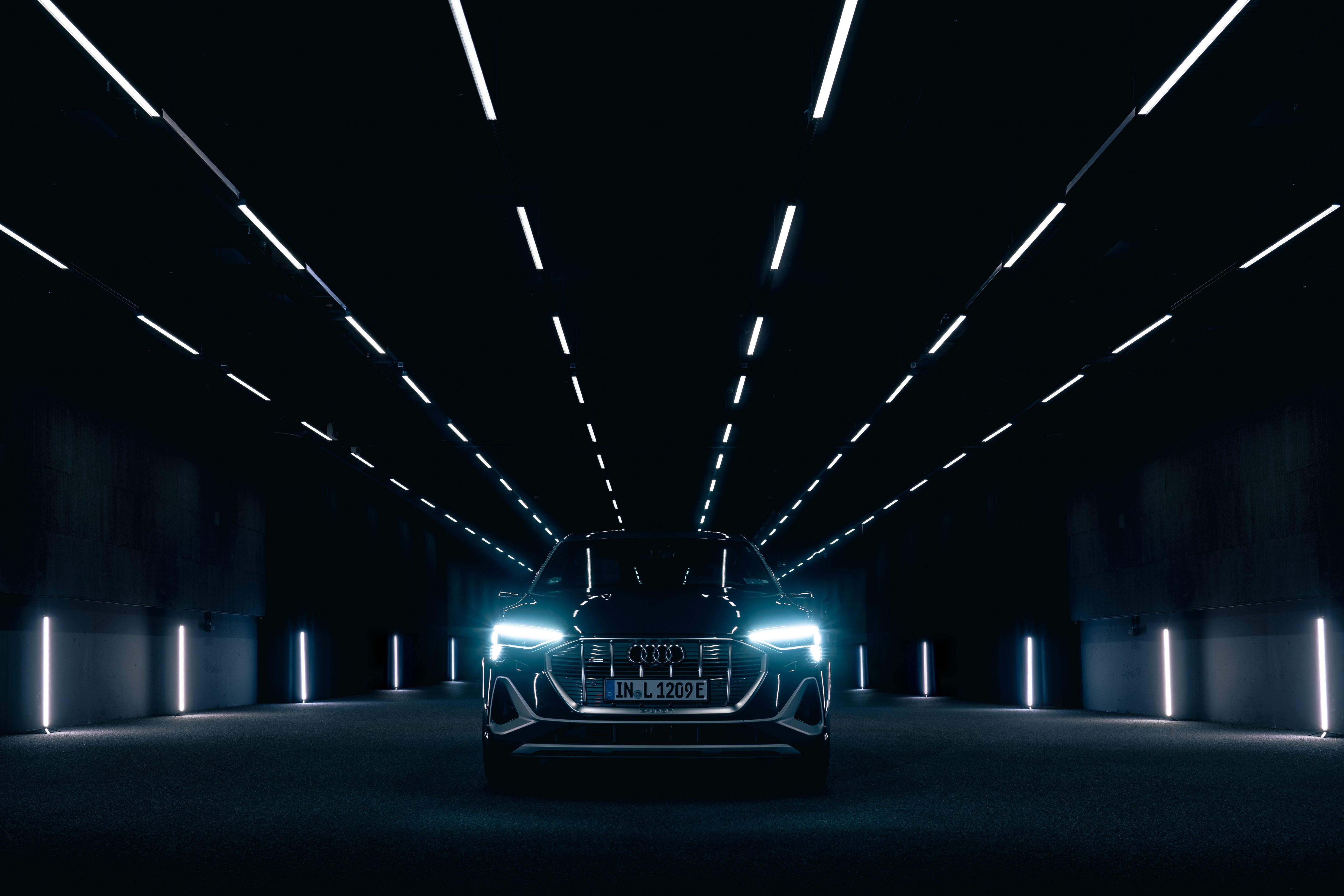
Credit: www.caranddriver.com
Frequently Asked Questions Of Laser Headlight Bulb
Are Laser Headlights Better Than Led?
Laser headlights offer superior range compared to LED lights, providing better visibility on roads. However, they are more expensive and less common in vehicles. LED lights, while not as powerful, still deliver efficient, long-lasting performance suitable for most driving conditions.
Are Laser Headlights Legal?
Laser headlights are legal in many regions, but regulations vary by country and state. Confirm with local laws before installation to ensure compliance.
Do Laser Headlights Work?
Yes, laser headlights are functional and provide enhanced road illumination. They offer longer reach and greater brightness than traditional headlights, improving night-time driving safety.
What Is The Brightest Headlight Bulb That Is Legal?
The brightest legal headlight bulb is a 55-watt halogen that meets DOT standards. LED conversions can also be bright and legal if DOT compliant. Always check local regulations to ensure legality.
Conclusion
As we wrap up, remember that laser headlight bulbs are a leap forward in automotive lighting. They promise longevity, efficiency, and unparalleled brightness. Embracing this innovative technology could redefine your driving experience. Stay illuminated on the road ahead by considering a switch to laser headlight bulbs.
Safe travels!